
Modern manufacturing is focused as much as possible on energy conservation while maintaining high productivity and automated control of technological processes.
We invite you to review the recommendations from the experts at PNEUSYSTEMS Engineering Company, which will help ensure maximum performance from your compressors regardless of production speed and reduce your energy costs.
How can we prepare compressors for an increase in production?

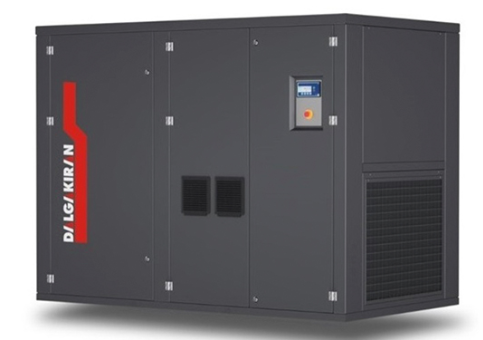
If a business is in the process of expanding its capacity, it is very important to prepare the compressor and other components of the compressed air system for increased operating conditions. To do this, follow these steps:
- Conduct an audit of the air distribution system:
- Compare the compressor’s current capacity with the capacity that will be needed when production increases.
- Develop a plan for changing the operating mode of the compressors:
- If your piston compressor runs for 4–5 hours per shift, assess whether its capacity will be sufficient if the number of shifts increases.
- Make sure that a single compressor will be able to supply compressed air to the new users.
- Calculate your compressed air requirements:
- Determine whether compressed air will be needed continuously or intermittently, but in larger quantities.
- Estimate the cost of new equipment:
- Calculate the cost of a new compressor and the components of the pneumatic system.
- Conduct an audit of the performance and condition of the components:
- Check the dryers, filter systems, valves, oil separators, and piping to ensure they are ready to handle the increased volume of compressed air.
- Make sure that the existing dehumidifiers and aftercoolers can handle the increased humidity in the system.
- Check the receiver’s capacity:
- Compare the current receiver capacity with the future increased compressor capacity, higher operating pressure, and increased compressed air consumption.
Important! Purchasing a new receiver with a larger internal volume without replacing the old compressor with a more powerful one will only increase the air reserve, but will not solve the problem of increasing the pneumatic system’s performance. Increased compressed air consumption will cause a drop in working pressure in the receiver, which will lead to compressor failure.
- Check the compressor’s service life:
- The technologies used in the manufacture of compressor equipment have improved significantly. The performance of units that are more than 10–20 years old cannot be regulated effectively enough, which creates certain difficulties in the operation of the compressed air system.
- Modern models are equipped with variable-speed drives (VSD technology), which allow the compressor’s operating speed to be adjusted. It is also effective to use oil-free scroll compressors with high-efficiency IE3 motors that offer high efficiency. These units are characterized by low noise levels, ease of use and operation, and produce 100% pure, oil-free air.
By following these recommendations, you can ensure maximum performance of your compressors and minimize energy costs while increasing production.
Specifics of Preparing the Air System for a Reduction in Production or a Temporary Shutdown
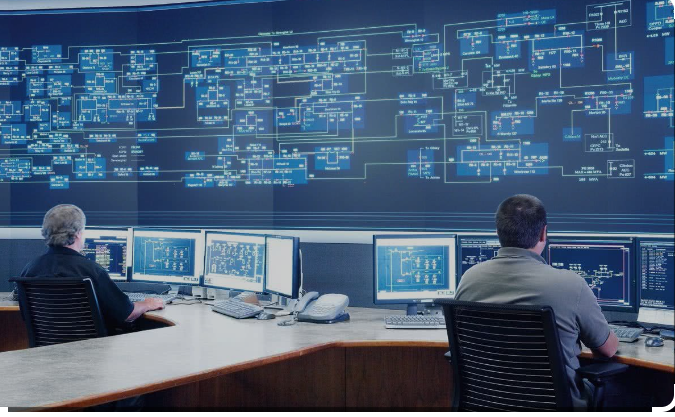
If a company plans to reduce production rates or temporarily suspend operations, the compressor system must be prepared for these changes. The following are recommendations for various types of compressors:
Recommendations for shutting down various types of compressors:
- Compressors with variable-speed drives (VSD):
- Turn off the power to the compressor.
- Fully charge the battery and keep it ready for a restart.
- Water-cooled air compressors:
- After the compressor stops, shut off the water supply. This will prevent condensation from forming inside the compressor and the pneumatic system components.
- Oil-free compressors:
- In the event of a complete shutdown of the air system, oil-free compressors must have their main drive shaft manually rotated via the motor drive coupling once a week. This will help prevent sudden fluctuations in pressure and compression ratio during prolonged periods of inactivity.
- Centrifugal compressors:
- Stop the unit but leave the power on so that the auxiliary oil pump remains running. This will help maintain the oil temperature at the proper level for circulation around the bearings during extended periods of downtime.
- Dehumidifiers:
- Dehumidifiers can be stopped manually and, if necessary, the pressure can be reduced.
Recommendations for restarting the compressor unit:
- Turn off the power to the unit.
- Remove the drive shaft guard and check the rotation of the drive coupling. If the components rotate freely, reinstall the guard and turn on the compressor.
- For water-cooled compressors, turn on the water supply before starting the unit.
- Close the compressor discharge valve and start the unit.
- Slowly open the air release valve until the air has escaped and the pressure has stabilized.
By following these recommendations, you can ensure that the compressor system is shut down and restarted safely, minimizing the risk of damage and downtime.
How can you save on energy consumption?
Energy costs for compressor systems can account for 30% or more of total operating expenses. Reducing the cost of compressed air production has a significant economic impact on the entire enterprise. To achieve this, we recommend taking the following steps:
- Using a soft start to start up equipment:
- Reduction of motor starting currents.
- A significant reduction in voltage dips in the power grid during motor startup in systems with limited short-circuit capacity.
- Reduction of electrodynamic forces on the motor windings and mechanical shock loads on the mechanisms.
- This helps extend the unit’s service life and reduce energy consumption during startup.
- Reducing the load on the compressor during idle operation:
- Shifting the compressor into deep throttling.
- Implementation of group pressure control during operation:
- Reducing the operating pressure in the system to the minimum level without compromising performance. Reducing the operating pressure by 1 atm results in a 2% savings in electricity consumption. Over the course of a year, this can lead to significant savings.
- Installing controllers:
- Reducing the runtime of the compressor during no-load operation. Compressors that continue to run after the discharge mode has been turned off still consume electricity.
- Reduction in cooling water consumption.
- Detecting and repairing leaks.
- Regulation of the temperature of incoming atmospheric air:
- The optimal temperature range is +17°C to +22°C.
- Energy Recovery:
- Without energy recovery, the heat generated simply escapes into the atmosphere through the cooling system. The amount of energy that can be recovered depends on the size of the compressor and its operating mode. Heat recovery from compressed air reduces energy consumption, which leads to lower operating costs and reduced CO2 emissions. The generated heat can be used to heat water for industrial purposes or to heat buildings.
- Compressor Speed Control.
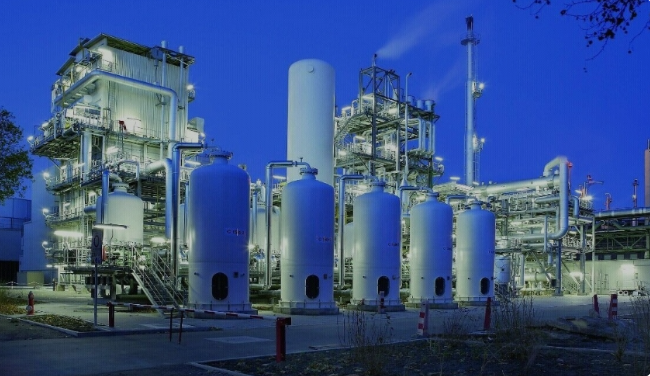
The operation of a compressor system should not be based on assumptions or guesswork. There are many ways to optimize and improve the performance of a compressed air system. Any investment must have a clear return on investment, so the purchase of even a single compressor must be economically justified. By following these recommendations, you can significantly reduce energy costs and improve your company’s operational efficiency.
Energy efficiency in automation technology is now a top priority. Successful solutions in terms of energy efficiency are based on a comprehensive concept. This comprehensive approach includes equipment, consulting, development, measurement, and training — exactly what we offer PNEUSYSTEMS Engineering Company.
Holistic thinking, purposeful action
- Engineering for Optimal System Design
Using three different processing systems—pneumatic, electric, and combined—Station 1 demonstrates the total cost of ownership with varying cycle times over several years of operation. Visitors can set their desired payback period and identify the most cost-effective solution for that period in terms of purchase price and energy costs.
- Products and Solutions for Improving Energy Efficiency
For example, decentralized air islands located very close to the actuators allow for targeted compressed air savings at Station 2. But the potential is much greater: the animated images provide information on 11 additional opportunities to save compressed air. Services and Professional Development as Management Tools.
To address these issues, we use the following FESTO products and modules:
MSE6 Energy Efficiency Module
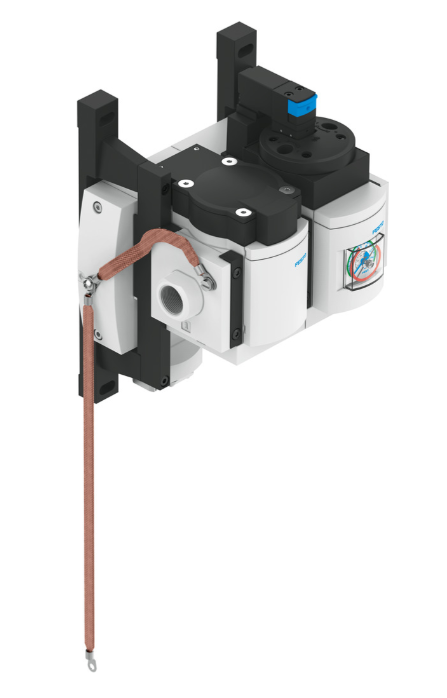
The MSE6 Series energy-efficiency module regulates the supply of compressed air when the system is shut down and prevents losses caused by any leaks. In addition, flow rate and pressure can be controlled.
- An intelligent control device for optimizing compressed air as an energy source in industrial automation technology
- Combination of a flow sensor and a shut-off valve with a pressure sensor
- Identifying Downtime and Compressed Air Leaks in Machinery
- Equipped with measurement, monitoring, and diagnostic functions
- Fieldbus connectivity (PROFIBUS DP, PROFINET IO, EtherNet/IP, or EtherCAT) via the built-in bus module enables connection to a higher-level controller
- Reliable operation thanks to active air shutoff and pressure reduction
SFAM Flow Sensor
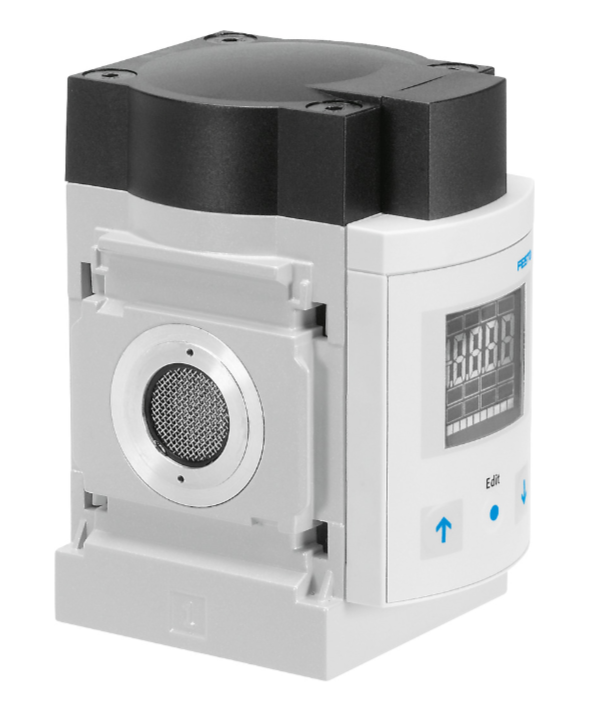
You can easily integrate our SFAM modular flow sensor into air preparation units. It continuously provides information on absolute flow and collects cumulative values based on air consumption measurements.
- IO-Link connectivity with efficient remote parameterization and replication
- A versatile solution with integrated pressure and temperature measurement
- As a standalone unit or as a compact version in MS Series air preparation units
- Provides information on absolute flow and measurements of accumulated air consumption
- High accuracy, even with compressed air quality [7:4:4] in accordance with ISO 8573
- Reliable measurement even at high flow rates
- Reliable operation thanks to system power consumption monitoring
Various versions of the SFAM flow sensor reliably measure flow rates ranging from 10 to 15,000 L/min and transmit data to the control system via the standardized IO-Link interface. The high-contrast display and new, upgraded operating components ensure highly convenient and reliable operation even in industrial environments.
Compact installation space
When combined with the MS6 and MS9U air handling units, it saves installation space and reduces installation effort due to the absence of laminar flow at the inlet. The SFAM is also available as a standalone unit and can be installed vertically.
A Brief Overview of the Benefits
- IO-Link Communication
- Built-in pressure sensor
- Quick deployment thanks to the replication feature
- Remote parameterization via IO-Link
- Energy Consumption Output
- Temperature Display
One flow sensor for everything
The built-in pressure and temperature sensors provide a wide range of options for process monitoring and control. In addition, since no additional pressure sensor is required, installation effort and costs can be minimized. The ability to measure Ar, N₂, and CO₂ gases also allows you to monitor the use of inert gases.
What’s New with IO-Link Communication
All measurement data can be transmitted to the control system via the IO-Link interface. The advantages include minimal effort during connection, convenient remote parameterization, and an inexpensive, standardized connection cable.