
Pneusys engineering servo drive solutions
Servo drive system, engineered for your mechanics
We select the motor, servo controller, cables and control interface as one compatible system — from load calculation to commissioning support.
- Festo / WECON
- 24 / 220 / 380 V
- 0.1–6 kW
- Pulse+Dir / EtherCAT
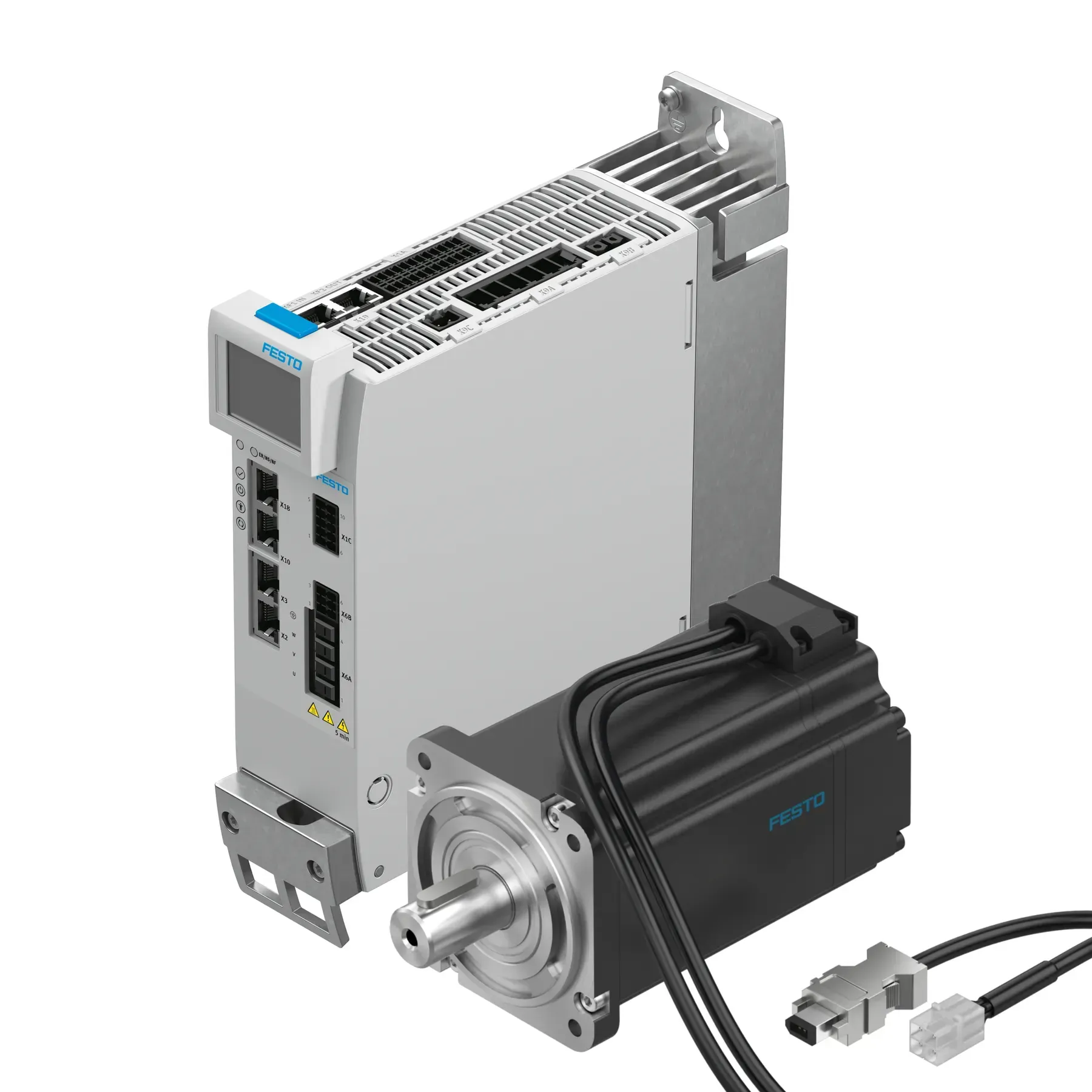
For critical machine axes
Precision, safety and predictable integration


A ready-to-use axis at a cost-effective budget
Drive, motor and matched cables
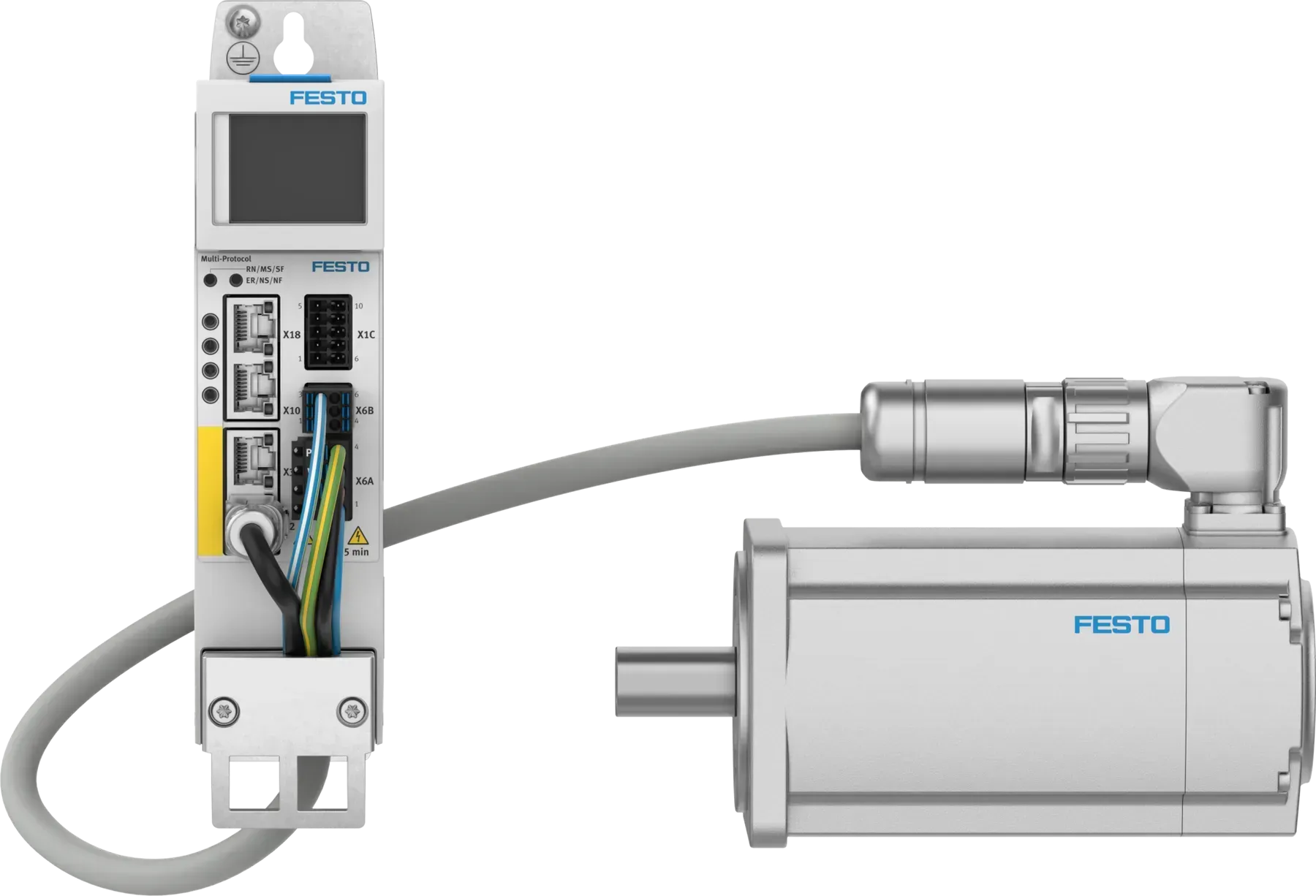
Pneusys servo system selection
Engineering selection, not just selling components
We treat the servo drive as one integrated system: mechanics, power supply, control, connections and operating conditions. Based on the result, we propose Festo for critical axes or WECON for a cost-effective budget.
Load calculation
We determine the drive parameters based on the actual mechanics and the machine duty cycle.
- required torque and margin;
- speed and cycle time;
- inertia ratio.
Configuration check
We match the characteristics of the motor, controller and control system.
- voltage and power;
- encoder and brake;
- Pulse+Dir, EtherCAT and PLC.
Complete kit configuration
We prepare a clear list of matched components for ordering.
- controller and servo motor;
- power and encoder cables;
- models, part numbers and lengths.
Implementation support
We support the process from equipment selection to commissioning the machine axis.
- connection recommendations;
- basic system parameters;
- upgrade support.
Start with the input data
Describe your axis — we will prepare the basis for the specification
Specify the mechanism type, mass, stroke, speed or travel time, and the available supply voltage.
Two approaches — one engineering logic
Choose the solution level for your application and budget
We compare more than component prices. We consider precision, dynamics, downtime risks, control method, commissioning complexity and ongoing maintenance.
For critical machine axes
A solution for projects where precision, dynamics, diagnostics, functional safety and predictable integration matter.
- When to choose
- Coordinated axes, fast cycles, precise positioning and machines with a high cost of downtime.
- Key strength
- An integrated ecosystem of components, setup tools, diagnostics and integration support.
- Solution format
- The controller, motor, cables and control architecture are selected for the specific machine cycle.
For standard axes on a cost-effective budget
A practical solution for new machines, upgrades and typical applications where controlled cost is important without random component matching.
- When to choose
- Standalone axes, feeders, positioning, equipment upgrades and projects with a limited budget.
- Key strength
- Straightforward configuration, practical control interfaces and a favorable balance of capability and cost.
- Solution format
- Matched kit: servo controller, motor, power and encoder cables of the required length.
Not sure which option to choose?
We will compare Festo and WECON using your axis parameters
We will show the differences in kit composition, control capabilities, integration risks and budget — without pushing the more expensive solution.
Transparent selection process
From input data to a ready-to-run servo axis
Each stage has a clear result: calculation, a justified platform choice, an agreed specification and implementation support.
-
We define the mechanics and duty cycle
We record the mechanism type, load, stroke, speed, acceleration, operating mode and available power supply.
Result: a complete technical brief for calculation. -
We check torque and inertia
We calculate continuous and peak torque, required speed, margin, inertia ratio and cyclic load.
Result: an acceptable motor and controller range. -
We select Festo or WECON
We match the motor, servo controller, encoder, brake, PLC interface, power cable and encoder cable.
Result: a verified specification with models and part numbers. -
We supply the kit and support commissioning
We coordinate supply, provide connection and basic parameter recommendations, and support integration.
Result: a matched servo system ready for commissioning.
What we need to get started
Send the key parameters of your axis
- Mechanism type
- Mass or force
- Travel stroke
- Speed or time
- Supply voltage
- PLC model
Ready configurations in Asfero
Servo kit examples for different applications
Representative configurations with the motor, servo controller and connections already matched. We verify the final choice against the mechanics and duty cycle of your axis.
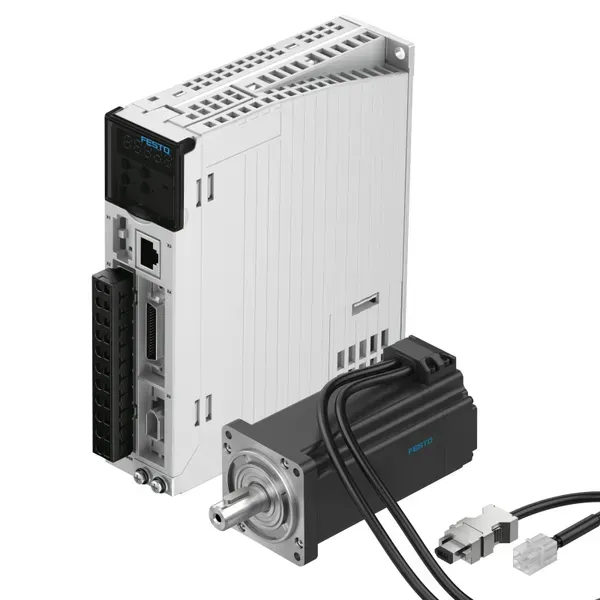
Compact 400 W servo axis
AS-400CMMB-400EMMB-IO
- Power supply220 V
- Torque1.27 N·m
- Speed3000 rpm
- Cables2.5 m
Applications: positioning, feeding, packaging and assembly machines.
View kit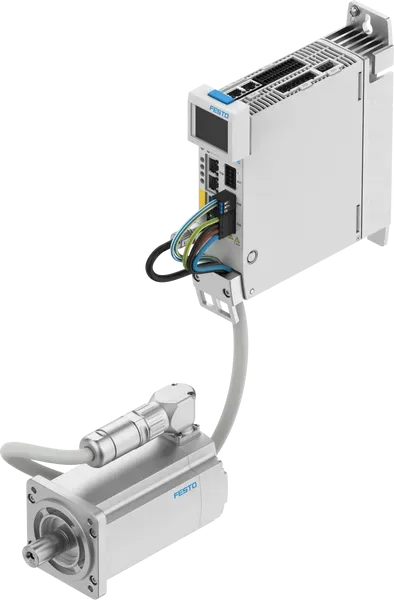
380 V networked servo axis
AS-2500CMMT-1770EMMT
- Controller2.5 kW
- Torque6.3 N·m
- Speed2700 rpm
- NetworksEtherCAT / PROFINET
Applications: dynamic axes, machine tools, complex machines and synchronized motion.
View kit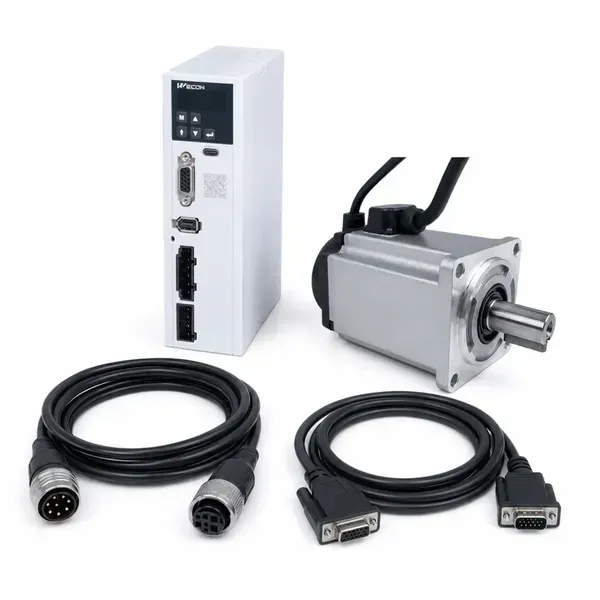
Basic 0.4 kW servo axis
VD2L010SA1PWD60M04030SA1F3M
- Power supply220 V
- Torque1.27 N·m
- ControlPulse + Direction
- Cables3 m
Applications: light conveyors, feeding, small manipulators and simple positioning axes.
View kit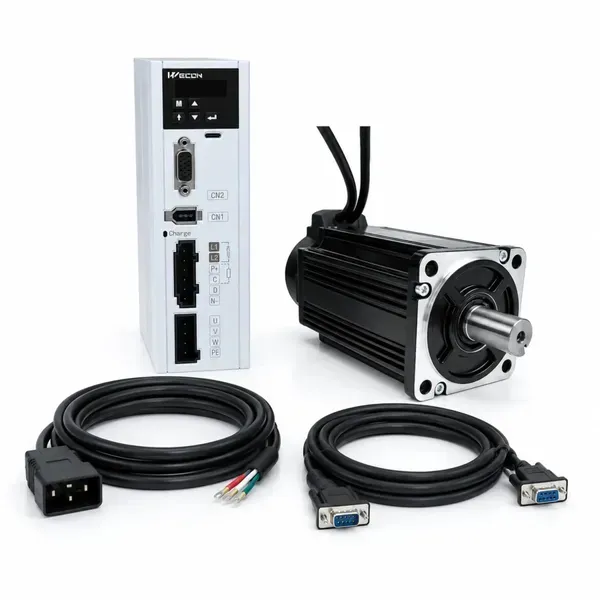
1 kW EtherCAT servo axis
VD5L014SA1PWD80M10030SC1F3M
- Power supply220 V
- Torque3.18 N·m
- ControlEtherCAT
- EncoderMulti-turn
Applications: packaging machines, gantries, machine tools and axes with position retention.
View kitEngineering request
Get a servo system engineered for your mechanics
Send the input data — a Pneusys engineer will check the load, select Festo or WECON, and prepare a matched component specification.
Torque, speed, inertia and duty cycle.
Festo Premium or WECON Smart Value for your application.
Motor, controller, cables, models and part numbers.
Connection and basic commissioning recommendations.
Send what you have: a photo of the mechanism, the model of the existing motor or a short description of the application. We will clarify the missing data together.
Selection request
Describe your application
Fields marked * are required. The data is used only to process your request.TECHNICAL KNOWLEDGE BASE

Information on Inductive Sensors
Let’s take a closer look at what an inductive sensor is. In…

Servo Drive: Which One Is Right for You?
Servo Drive (EA) vs. Pneumatics (PNA): Which One Is Right for You?…

How do you choose the right servo drive?
Criteria for Selecting a Servo Drive Choosing the right servo drive will…

How can you prepare your compressed air system for periods of increased or decreased production? Energy savings and maintaining production output.
Modern manufacturing is focused as much as possible on energy conservation while…
Engineering
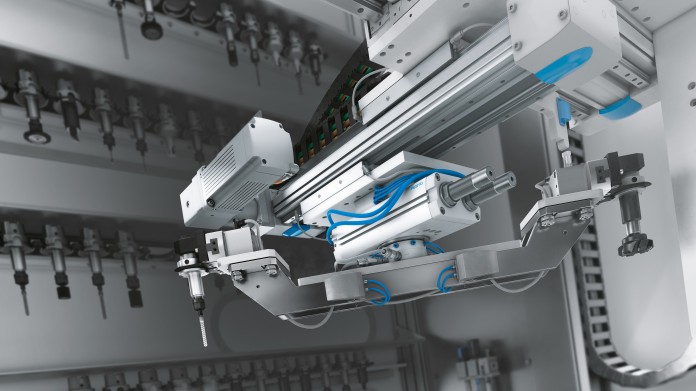
Pneumatic systems in the automation of food production and finished product packaging lines.
Pneumatic Components as the Foundation of Modern Automation The vast majority of automation components and…
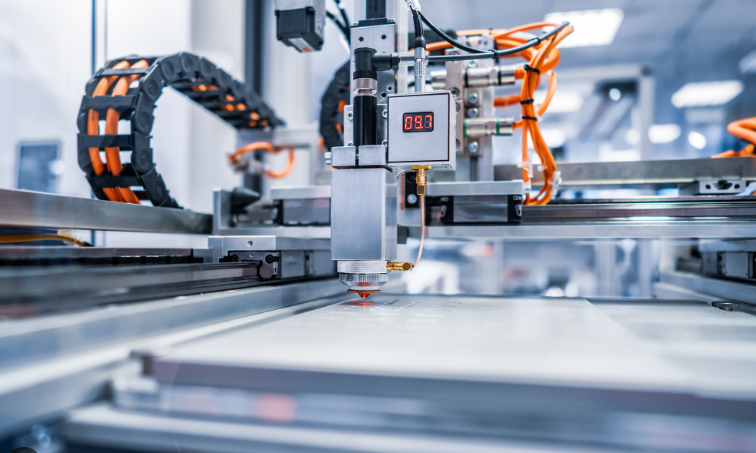
3D Systems
2D and 3D spatial motion systems. Cartesian kinematics. Our company specializes in the development, design,…

Design and Installation of Compressed Air Systems
The Engineering Center at PNEUMOSYSTEMS LLC is a dedicated division focused on solving problems related…

PSCC Control Cabinets
Our company specializes in the development, design, and manufacture of CONTROL CABINETS for general industrial…

ACTUATORS

MOTORS AND MOTOR CONTROLLERS

GRIPPERS

MANIPULATORS

VACUUM TECHNOLOGY

VALVES AND VALVE TERMINALS

MOTION TERMINAL

SENSORS

COMPRESSED AIR PREPARATION

CONNECTION TECHNOLOGY

CONTROL AND REMOTE TECHNOLOGY...

SOFTWARE

READY-TO-INSTALL SOLUTIONS

SYSTEMS WITH SPECIAL FUNCTIONS

OTHER PNEUMATIC DEVICES

CONTROL TECHNOLOGY AND REMOTE I/O

VALVE TERMINALS

PILOT VALVES

END-POSITION SENSOR BOXES

POSITIONER

ACTUATORS

PROCESS VALVES

COMPRESSED AIR PREPARATION

PNEUMATIC CONNECTION TECHNOLOGY

INDIVIDUAL VALVES

REGULATORS

DISPENSING AND PIPETTING HEADS

COMPRESSED AIR PREPARATION

SENSORS

CONNECTION TECHNOLOGY

ACTUATORS

GRIPPERS, ROTARY ACTUATORS
