
2D and 3D spatial motion systems. Cartesian kinematics.
Our company specializes in the development, design, and manufacture of kinematic systems and spatial motion systems in the X, Y, and Z coordinates. Cartesian robots, single-axis systems, 2D linear gantries, 3D gantries, and 3D manipulators with control cabinets for general industrial applications, custom orders, and mass production. Drawing on many years of experience in the market for industrial automation of technological processes and manufacturing, the engineering company PNEUSYSTEMS offers modern system solutions utilizing power mechatronics (servo drives and pneumatics) that are applied in various industrial sectors.
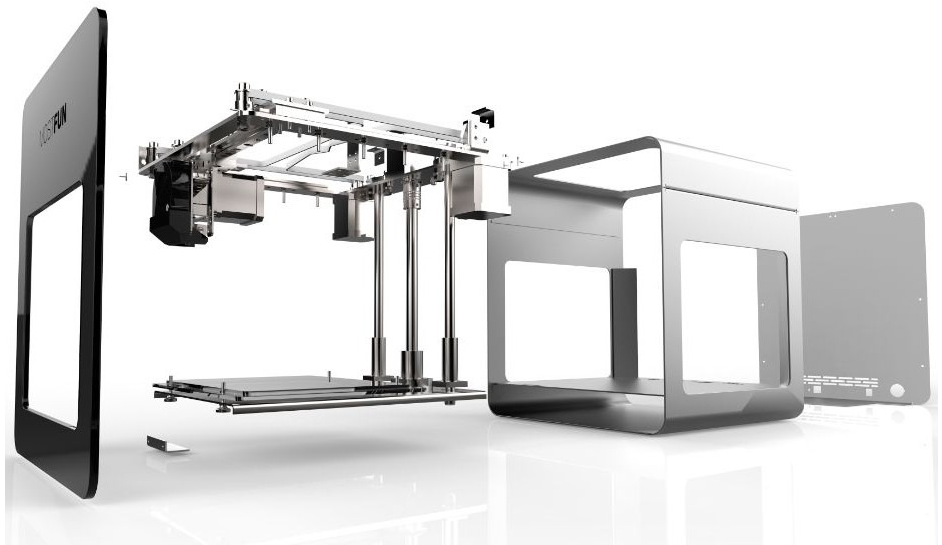
Cartesian Robots: Description and Applications
Cartesian robots, also known as rectangular or linear robots, are automated systems that use a Cartesian (rectangular) coordinate system for movement. They consist of three linear axes (X, Y, and Z), which allow the robot to move in three mutually perpendicular directions. These robots are characterized by their simple design and ease of operation.
Main Components of a Cartesian Robot
Linear Guides: They ensure precise linear motion along each axis.
Ball-screw pairs: They convert the engine’s rotational motion into linear motion.
Servo motors or stepper motors: They are used to precisely control movement along each axis.
Controller: It ensures the coordination of movements and the execution of program commands.
Cartesian robots are used in various industrial sectors due to their simplicity, reliability, and high precision. Let’s take a look at the main areas of their application with examples, such as:
Assembly and Installation
Cartesian robots are often used for automated component assembly in manufacturing. They can perform tasks with high precision and repeatability, which is important for mass production.
Example: At automobile plants, Cartesian robots are used to assemble small parts, such as electronic components or mechanical assemblies.
Packaging and Palletizing
In packaging lines, Cartesian robots are used to place products into packages, as well as for palletizing— stacking packaged goods onto pallets.
Example: In the food industry, Cartesian robots are used to automatically pack products into boxes or bags and place them on pallets for transport.
Cutting and Processing of Materials
Cartesian robots are effective in cutting, drilling, and other material machining processes. They provide the precision and speed required for machining complex shapes and structures.
Example: In the furniture industry, Cartesian robots are used to cut wooden parts with high precision, ensuring the quality of the final product.
3D Printing and Additive Manufacturing
Cartesian robots are widely used in 3D printing facilities to apply materials layer by layer, which allows for the creation of three-dimensional objects with high precision.
Example: In the aerospace industry, Cartesian 3D printers are used to print complex parts from metal powders, which reduces the weight of structures and improves their performance.
Laboratory Automation
In laboratories, Cartesian robots are used to automate routine tasks such as dispensing liquids, transporting samples, and conducting experiments.
Example: In the pharmaceutical industry, Cartesian robots are used to automate the dosing and mixing of chemicals, which improves accuracy and reduces the risk of errors.
Drawing and Engraving
Cartesian robots can be configured to perform drawing or engraving tasks on various surfaces, which is important for the production of promotional materials and souvenirs.
Example: In the production of promotional materials, Cartesian machines are used to precisely apply images and text to billboards, souvenirs, and other items.
Cartesian robots are versatile and effective solutions for automating a wide range of manufacturing processes. Their simplicity, precision, and reliability make them indispensable in many industries. From assembly and packaging to material handling and 3D printing, Cartesian robots deliver high productivity and efficiency across a variety of applications.
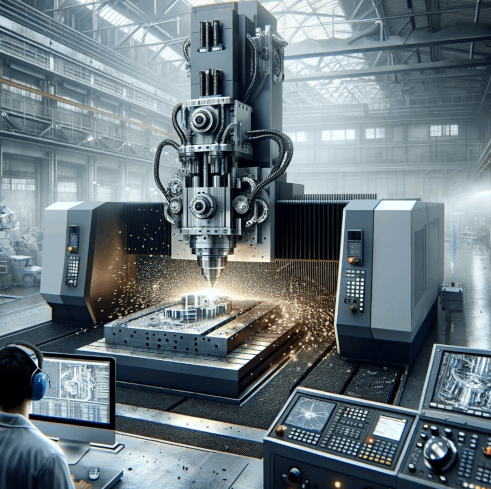
Hybrid kinematic systems incorporating servo drives and pneumatics
Kinematic systems, whose primary function is to transmit and convert motion, are widely used in automated manufacturing processes. The main types of such systems are servo drives and pneumatic drives. Each of these types has its own advantages, disadvantages, and areas of application. Let’s take a closer look at them.
Servo drives are electromechanical systems that provide precise control over the position, speed, and acceleration of mechanical components. They consist of an electric motor, a feedback sensor, and a controller.
Advantages of Servo Drives
High accuracy and repeatability: Servo drives ensure high positioning accuracy, which is particularly important in precision manufacturing processes.
Wide adjustment range: Servo drives can operate over a wide range of speeds and torques.
Reliability: Servo drives have a long service life and a high level of reliability thanks to the use of modern materials and technologies.
Energy Efficiency: High energy efficiency helps reduce energy costs.
Flexibility in configuration: They are easy to program to perform complex movements and tasks.ься для виконання складних рухів і задач.
Pneumatic Actuators
Pneumatic actuators use compressed air to generate motion. They consist of pneumatic cylinders, valves, and an air distribution system.
Advantages of Pneumatic Actuators
Simplicity of Design: The simple design makes it easy to install and maintain.
Low cost: Pneumatic systems are generally less expensive than servo drives.
Safety: Pneumatic systems are safe in explosive environments because they do not produce sparks.
Overload resistance: The pneumatic system is resistant to short-term overloads and shock loads.
No need for an external power source: They operate without the need for a power supply, which is an advantage in certain conditions.
Disadvantages of Pneumatic Actuators
Low accuracy: Pneumatic systems are generally less precise than servo drives.
Limited speed control: Limited range of speed and torque adjustment.
High operating costs: They require a constant supply of compressed air, which can be expensive.
Noise level: Pneumatic systems are generally noisier in operation.
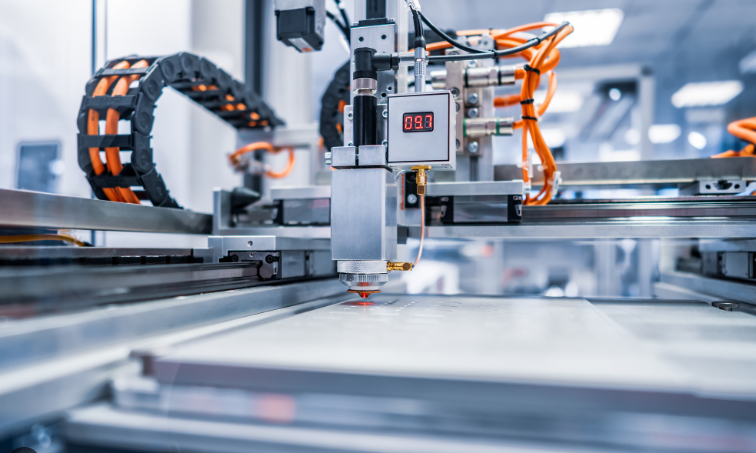
Comparison and Selection of Systems
When choosing between servo drives and pneumatic drives, the specific requirements of the application should be taken into account. Servo drives are better suited for high-precision automation and heavy-duty applications. If simplicity, low cost, and safety in explosive environments are important, then pneumatic systems are the better choice.
Conclusion
Servo drives and pneumatic actuators are key components of modern automated systems. The choice between them depends on the specific needs of the production process, the budget, and operating conditions. A thorough understanding of their advantages and disadvantages enables engineers to make informed decisions and ensure the efficient operation of production systems.
Kinematic systems can be classified according to various criteria, such as the type of drive, the shape of the mechanical components, their purpose, and other characteristics. Let’s take a look at the main types of kinematic systems.
Types of Kinematic Systems by Drive Type
Electromechanical Systems
Servo drives: High-precision motion control systems that use electric motors and feedback sensors.
Stepper motors: Electric motors that move a specific number of steps per pulse.
Induction Motors: Simple and reliable motors, often used in industrial drives.
Pneumatic Systems
Pneumatic Cylinders: Compressed air is used to produce linear motion.
Pneumatic motors: Rotary actuators powered by compressed air.
Hydraulic Systems
Hydraulic Cylinders: Hydraulic fluid is used to generate high-force linear motion.
Hydraulic motors: Rotary actuators powered by hydraulic fluid.
Mechanical Systems
Gear Transmissions: Gears are used to transmit motion and to change speed and torque.
Belt Drives: Belts and pulleys are used to transmit rotational motion.
Chain Drives: Chains and sprockets are used to transmit motion.
Types of kinematic systems based on the shape of mechanical elements
Linear Systems
Linear Guides: They ensure linear motion with high precision and minimal friction.
Ball-screw pairs: They are used to convert rotational motion into linear motion with high precision.
Rotational Systems
Rotary-piston mechanisms: They are used in internal combustion engines.
Planetary gear sets: Complex gear systems that provide a high gear ratio and a compact design.
Types of Kinematic Systems by Purpose
Transportation Systems
Conveyors: Systems for moving materials along a production line.
Robotic Manipulators: They are used for precise movement and manipulation of objects.
Precision Systems
CNC (Computer Numerical Control): Systems that ensure high precision in the machining of parts using computer-controlled operations.
Optical Tables: They are used in optical laboratories for the precise positioning of components.
Advantages and Disadvantages of Different Types of Kinematic Systems
Electromechanical Systems
Advantages: High precision, reliability, and programmability.
Disadvantages: High cost, difficult to maintain.
Pneumatic Systems
Advantages: Simple design, safety in explosive environments, low cost.
Disadvantages: Low accuracy, high noise levels, high operating costs.
Hydraulic Systems
Advantages: High power, stable performance under heavy loads.
Disadvantages: Difficulty in maintenance; potential for fluid leaks.
Mechanical Systems
Advantages: High reliability, simple design.
Disadvantages: Part wear, limited accuracy.
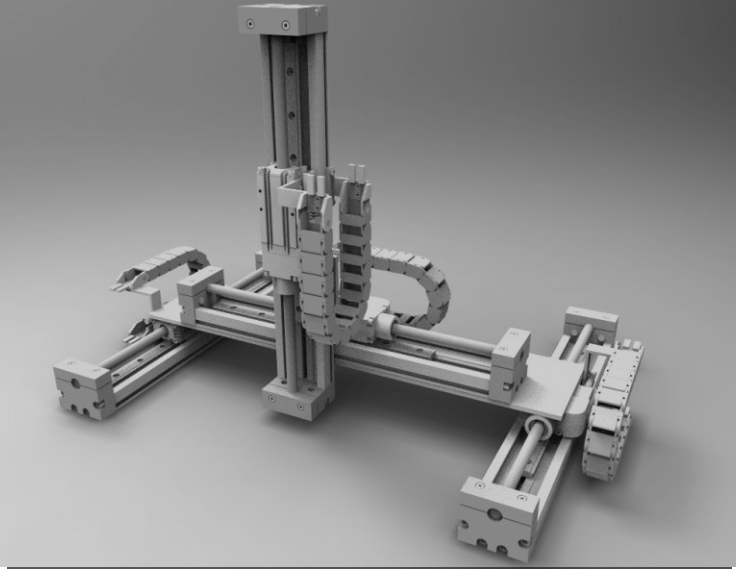
Different types of kinematic systems have their own advantages and disadvantages, and the choice of system depends on the specific requirements of the manufacturing process. A thorough understanding of the characteristics of each type of system enables engineers to make informed decisions to ensure the efficiency and reliability of automated processes.
Given the relentless progress across all industrial sectors, our company strives to keep pace with these advancements. We offer our customers a variety of options for such systems, ranging from extremely small to reliable and highly dynamic manipulators: at IC PNEUSYSTEMS, you’ll find the right solution for every application. In addition to single-axis systems, linear, planar, and three-dimensional manipulators enable free positioning within a linear range up to three-dimensional space.
These solutions feature the high response speed of electronic components and the reliability of pneumatic control elements. Most often, machine control components operate in dusty, humid, corrosive, or other adverse environments. Consequently, this area of IC PNEUSYSTEMS’ production remains one of the most promising, as the demand for ready-made engineering solutions continues to grow.
The main power unit is often supplied by the well-known German brand FESTO —a global leader in the production of advanced pneumatic automation components and servo drive technology. As a result, our screening systems — and, consequently, their configuration and control — easily integrate into the overall control system of the production line, which typically uses industrial network protocols such as Profibus, CANopen, DeviceNet, EtherCAT, Ethernet, and PROFINET.
A wide range of components makes it possible to create flexible and functional control modules.

ADVANTAGES OF OUR SYSTEMS
The main advantage is that the customer receives a fully operational, tested system that is ready for installation on the machine’s production line. IC PNEUSYSTEMS has extensive experience in the manufacture and implementation of kinematic systems and spatial motion systems in the X, Y, and Z coordinates. Our company’s engineering solutions are used in robotics, metallurgy, packaging, the chemical industry, and woodworking.
The main advantages of our kinematic systems and spatial motion systems in the X, Y, and Z coordinates:
- A wide range of system solutions for various industries and a large selection of components.
- A customized approach to designing control cabinets for each client.
- Short lead times for design and manufacturing.
- A complete set of design documentation.
- Comprehensive quality control of manufactured products.
- Flexible pricing policy.
- Ongoing efforts to improve our products.
- Free design and engineering services.
- Implementation of even the most unusual projects.
- Technical support throughout the entire product lifecycle.
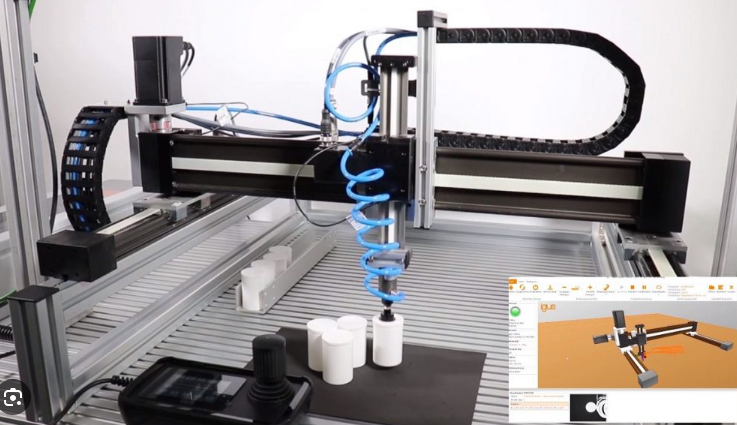
PNEVMOSYSTEMS Engineering Company is not only a manufacturer and supplier of state-of-the-art equipment for the automation of production processes, but also successfully carries out a full range of engineering services, including the analysis of the condition of hydraulic and pneumatic components and providing recommendations for their replacement and repair, as well as training and professional development for your company’s specialists.
We handle projects of varying levels of complexity, and the engineers at our technical center are ready to provide support throughout the entire service life of the control cabinet.
DELIVERY TERMS AND WARRANTY OBLIGATIONS
The warranty period is 24 months from the date of commissioning. The warranty does not cover parts subject to normal wear and tear (filter elements, replacement parts, pressure gauges, etc.).
The delivery time for the equipment is 2 to 12 weeks after the prepayment is received in the account of Pneusystems Engineering Company or after the contract is signed and the project, schematic diagram, and component specifications are agreed upon with the Customer.
SHIPPING AND PAYMENT
Delivery to any region of Ukraine. Payment by bank transfer. Delivery to EU countries is possible and subject to separate discussion.